On this page
TicNote vs Notta Memo: Value Minutes vs Translation Power
The short version
The 50-word verdict
TicNote wins for value hunters and moderate-volume recorders — 600 free minutes and the largest paid allowance in our dataset. Notta Memo wins for multilingual and team-platform users — 58-language translation and Salesforce/Zoom workflows. Pick by which wall you hit first: the minute cap or the language barrier.
The details
At a glance
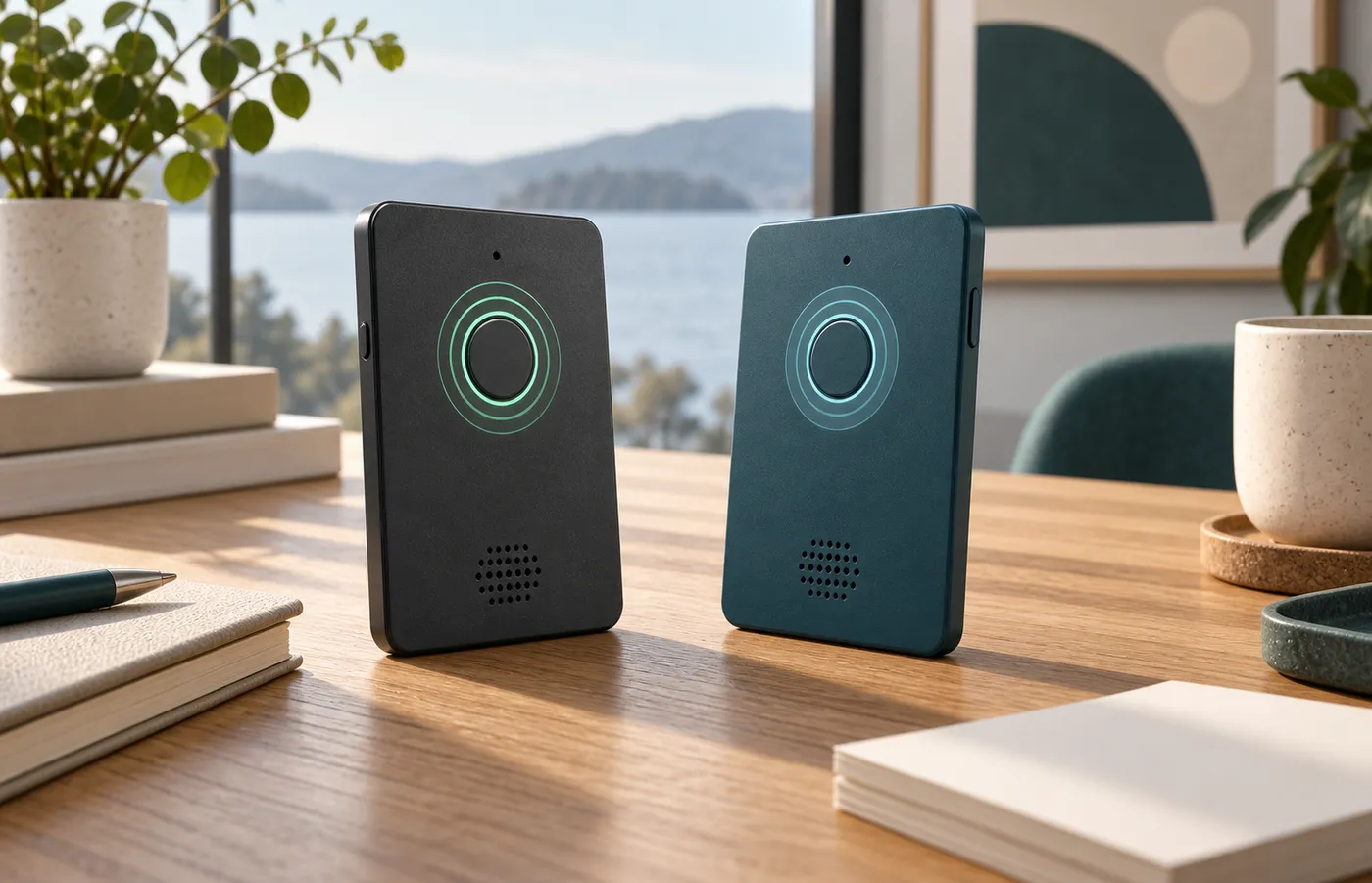
Two card-shaped AI recorders, two very different jobs. TicNote is the value play: the largest free transcription allowance we track and the cheapest paid plan in the category. Notta Memo is the platform play: a card recorder built by a transcription-software company, aimed at multilingual meetings and teams that already live in the Notta app. Both are thin magnetic cards that ride on your phone — but the decision between them is about minutes versus workflow, not hardware.
| TicNote (Mobvoi) | Notta Memo (Notta) | |
|---|---|---|
| Form | Card | Card |
| Free transcription | 600 min/mo | 120 min/mo |
| Cheapest paid plan | Pro — 2,100 min/mo | Pro — 1,800 min/mo |
| Phone calls | Placement only | True capture (bone-conduction) |
| Languages | 120+ claimed | 58, real-time translation |
| Integrations | Live transcription, Shadow AI agent | Notion, Salesforce, Zoom (Notta platform) |
| Storage | 64 GB | 32 GB |
| Battery | ~25 hrs continuous | 30 hrs recording / 28-day standby |
| Amazon listing | 3.9★ / 288 ratings (official Mobvoi) | 3.2★ / 61 ratings |
Going deeper
Head-to-head: the spec table
The full decision grid, from our cross-checked device dataset. Where a figure is a maker claim rather than a verified measurement, it is labeled as such.
| Spec | TicNote | Notta Memo |
|---|---|---|
| Form factor | Card, magnetic | Card, magnetic |
| Free transcription | 600 min/mo | 120 min/mo |
| Cheapest paid tier | Pro — 2,100 min/mo | Pro — 1,800 min/mo |
| Top tier | Unlimited — unlimited min/mo | Business — unlimited min/mo, per-seat |
| Phone-call capture | Placement only | True — bone-conduction mic via magnetic case |
| Storage | 64 GB (≈434 hrs) | 32 GB (≈144 hrs) |
| Battery | ~25 hrs continuous, 470 mAh | 30 hrs recording / 28-day standby |
| Apps | iOS, Android | iOS, Android, Web (Notta platform) |
| Integrations | Live transcription, Shadow AI agent | Notion, Google Calendar, Salesforce, Zoom (via Notta platform) |
| Languages | 120+ claimed | 58, real-time translation |
| Transcription mode | Cloud | Cloud |
| Display | OLED | InstantView OLED |
| Warranty | 1 year from receipt | Badge only — confirm on listing |
Practical guidance
The plan-ladder value math
Strip the brand names and this is a minutes-versus-workflow bet. On the free tier, TicNote gives you 600 minutes a month against Notta's 120 — a five-to-one advantage that covers a full work week of meetings before any plan starts. On the cheapest paid tier, TicNote's Pro carries 2,100 minutes a month in our dataset, against Notta Pro's 1,800. In both rungs of the ladder, TicNote offers more included minutes.
The honest caveat is that TicNote's Pro allowance is a dataset figure, not one the vendor publishes on its own pages as of September 2026 — our TCO study flags it for confirmation. If the real allowance is lower, the two Pro tiers converge on minutes and the value gap narrows. Notta's 1,800-minute Pro allowance, by contrast, is manufacturer-published.
Where the value math flips is volume. If you transcribe under 120 minutes a month, both free tiers cover you and the comparison collapses to hardware and ecosystem. If you transcribe 600 to 1,800 minutes a month, TicNote's free tier absorbs more of it before you ever pay. Only above roughly 1,800 minutes a month does Notta's paid tier start to matter — and at that volume, the per-seat Business tier with unlimited minutes becomes the relevant rung.
For the full three-year arithmetic — hardware plus three years of each plan — our 3-year cost study ranks every device by true total cost. In our dataset, TicNote's three-year total sits below Notta Memo's, driven almost entirely by the cheaper Pro plan and the larger free tier. Price your own month with the transcription minutes calculator before paying for headroom you won't use.

The wrap-up
Where TicNote wins
- The largest free tier we track. 600 minutes a month is five times Notta's 120 — roughly 15 hour-long meetings covered before any plan starts. For moderate-volume recorders, this is the single most valuable spec on the page.
- The cheapest paid plan in the category. TicNote's Pro tier carries 2,100 minutes a month in our dataset, the largest paid allowance we track, at the lowest annual plan price in the category. The value-per-minute math is the best in our dataset.
- Live transcription and the Shadow AI agent. TicNote advertises live on-screen transcription and a Shadow AI chat agent — a workflow for people who want the transcript appearing as they record, not after.
- More storage. 64 GB against Notta's 32 matters if you record offline for days before syncing.
- A stronger Amazon track record. TicNote's listing shows 3.9★ from 288 ratings with Mobvoi as the official seller (September 2026) — a larger base of buyer feedback than Notta Memo's listing.
Context
Where Notta Memo wins
- Translation as a first-class feature. Notta Memo transcribes 58 languages with real-time translation, backed by a four-microphone array plus a bone-conduction call mic. For cross-language meetings and international client calls, that is a workflow TicNote's 120+ language claim handles without the same live-translation emphasis.
- True call capture. Notta Memo records calls through its bone-conduction mic during magnetic attachment; TicNote is placement-only, which demands positioning discipline and fails in noise. If phone interviews are your core use, Notta's method is more reliable.
- Platform-grade integrations. Because Notta is a transcription platform first, the Memo inherits platform features: Notion sync, Google Calendar, Salesforce, and Zoom capture through the Notta platform. For Salesforce-centric teams, that is the closest a hardware recorder gets to CRM sync — see our sales recording guide for that workflow.
- An on-device display. The InstantView OLED shows recording status without opening an app — a small ergonomic edge.
- A per-seat Business tier. Notta's Business plan is sold per seat with unlimited minutes, which can scale more predictably for teams than a per-account meter.
Comparison
The multilingual difference
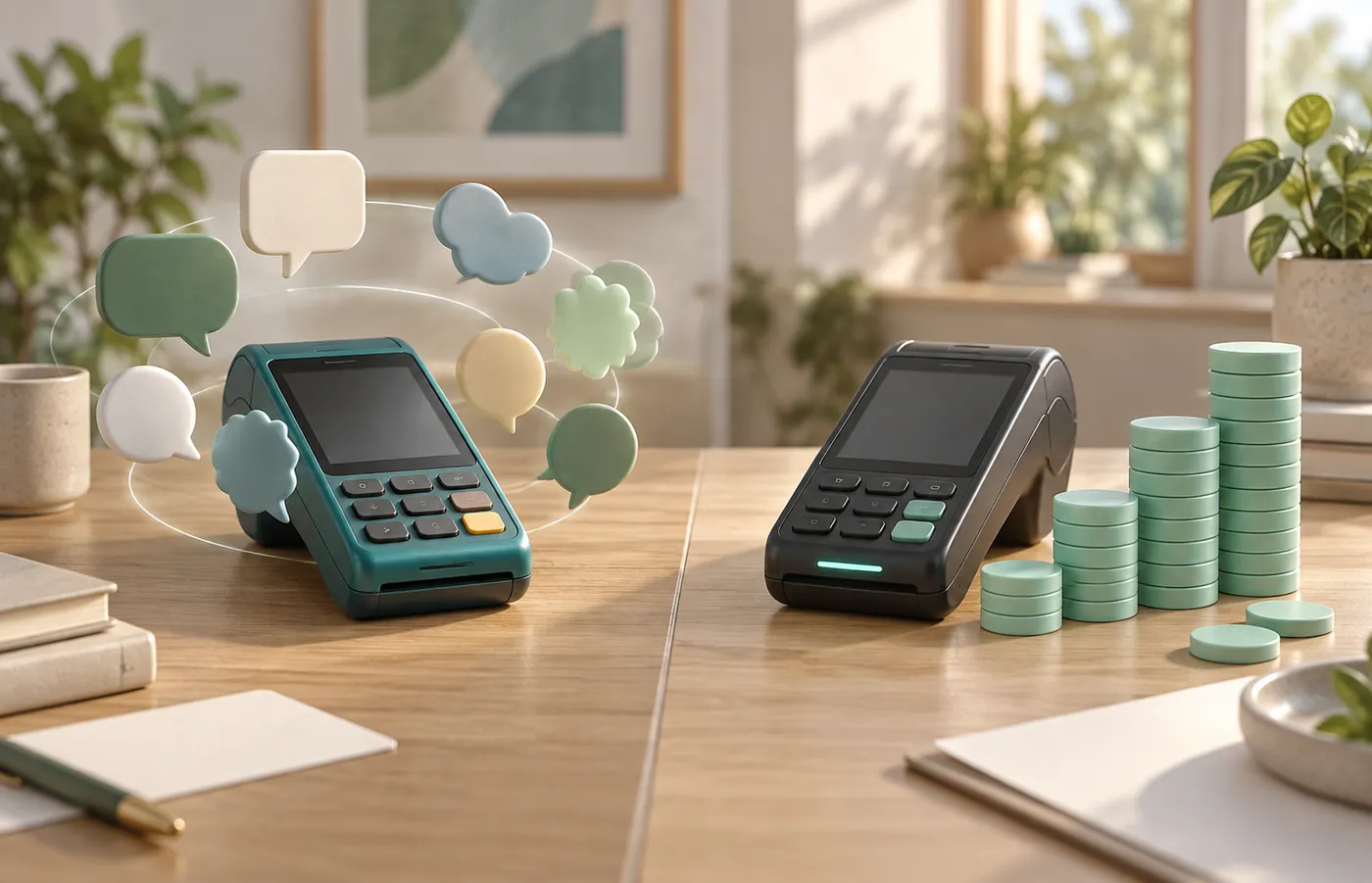
This is where the two devices genuinely diverge. Notta Memo is built around translation: 58 languages with real-time translation, aimed squarely at bilingual meetings and international calls. TicNote claims 120+ languages and real-time translation, but its emphasis is live transcription and the Shadow AI agent rather than translation workflows.
Our language support guide makes the distinction that matters: supporting a language at the transcription stage and translating between languages are different features. Among the devices we track, TicNote and Notta Memo are the two that actually advertise translation as a working feature — but Notta leads on the translation workflow, while TicNote leads on raw minute value. If your meetings are bilingual, Notta's translation-first design is the stronger fit; if your need is volume in a single language, TicNote's minutes win.
Method
App ecosystems: platform vs live-transcription
The two devices come from opposite software philosophies. Notta Memo is the hardware companion to the Notta transcription platform — its integrations (Notion, Google Calendar, Salesforce, Zoom via the Notta platform) are the reason a team would choose it. TicNote, by contrast, is a standalone recorder that advertises live transcription and a Shadow AI agent — a self-contained workflow rather than a platform play.
For a solo user who wants the transcript on screen as they record, TicNote's live-transcription angle is compelling. For a team whose notes need to reach Salesforce or a Zoom workflow, Notta's platform integrations are the deciding factor — see our teams guide for how seat count changes the recommendation. Neither device offers offline transcription; both are cloud-only, so privacy-conscious buyers should review our privacy guide and the consent-law map before recording others.

Bottom line
Who should pick which
| If this is you… | …the honest pick |
|---|---|
| Value hunter recording 5–15 hours a month | TicNote — 600 free minutes covers most of it, and the Pro plan is the cheapest in the category |
| Moderate-volume user who wants the transcript live | TicNote — live transcription and the Shadow AI agent |
| Bilingual meetings or international client calls | Notta Memo — 58-language real-time translation |
| Salesforce or Zoom-centric team | Notta Memo — platform integrations |
| Phone-call-heavy professional | Notta Memo — true bone-conduction call capture |
| Subscription-averse or offline-only | Neither — see the no-subscription and offline options in our no-subscription guide |
Measure the month, price the plan, and verify the live listings of both devices — our figures are September 2026 research — and the table above becomes arithmetic rather than opinion. TicNote asks one question — how many minutes do you need? — and Notta Memo asks a different one — how many languages and which platform? Neither question is rhetorical, and both answers change with your volume.
Bottom line
If neither fits, the honest outs
- PLAUD Note — the category default with true call capture and the deepest integration surface (Notion, Zapier, Dropbox, ChatGPT via MCP); see our TicNote vs PLAUD Note comparison.
- HiDock P1 — included unlimited transcription with no forced plan, for subscription-averse buyers; see the HiDock P1 review.
- iFLYTEK SR302 Pro — offline, on-device transcription for privacy-first users; no Amazon listing, so buy from the manufacturer.
FAQ