On this page
Pocket AI Recorder Review (2026): The Unlimited-Free-Tier Card, Honestly Weighed
The short version
The 50-word verdict
Pocket is the category's boldest economics pitch: a MagSafe-snapping card whose standard-accuracy transcription is unlimited and free, forever — no subscription required to get value out of the hardware. If that claim holds, it undercuts every metered plan on the market. The honest asterisk is that HeyPocket is a young company, and its boldest promise deserves verification before you buy.
The details
What Pocket is
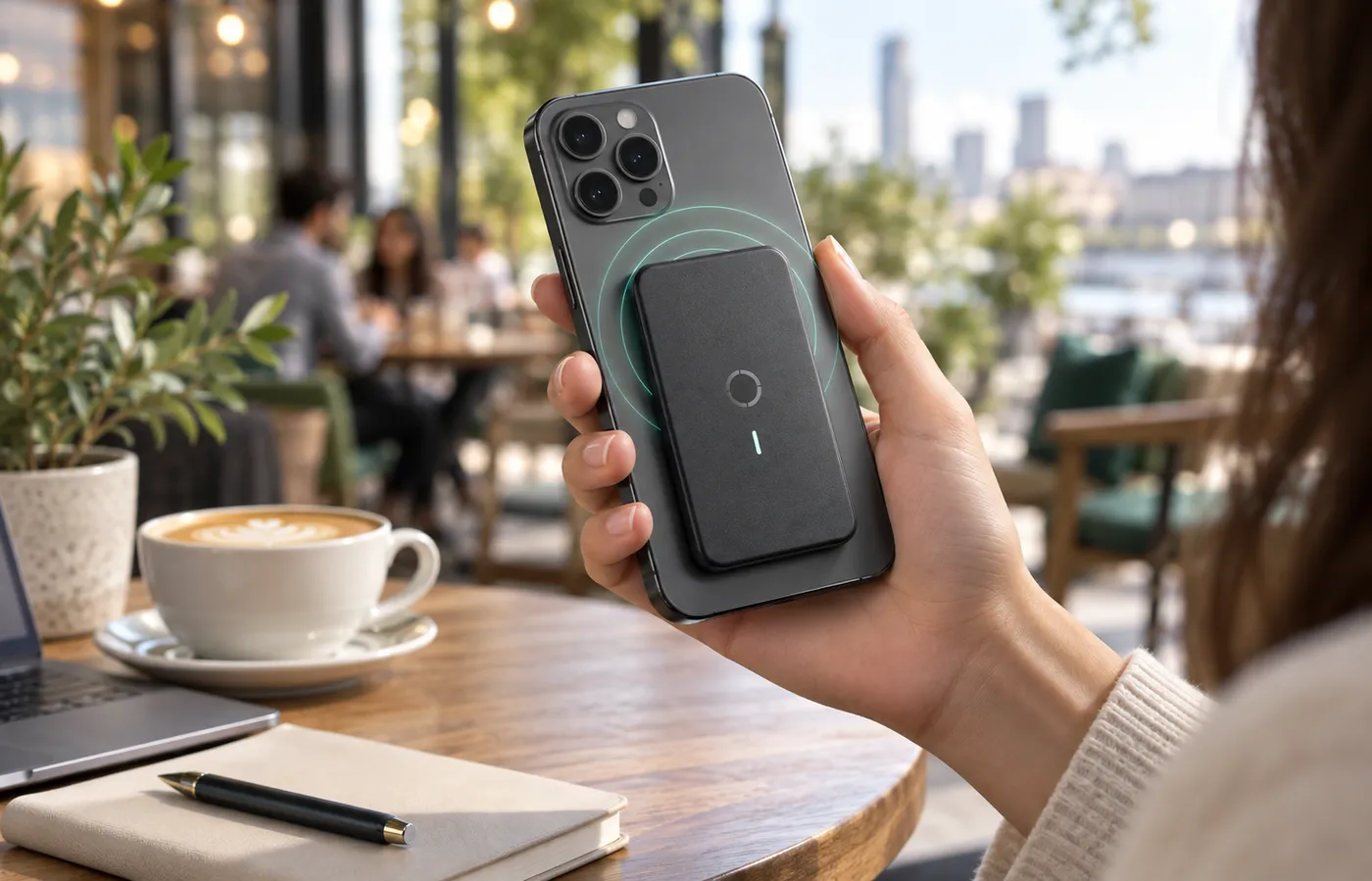
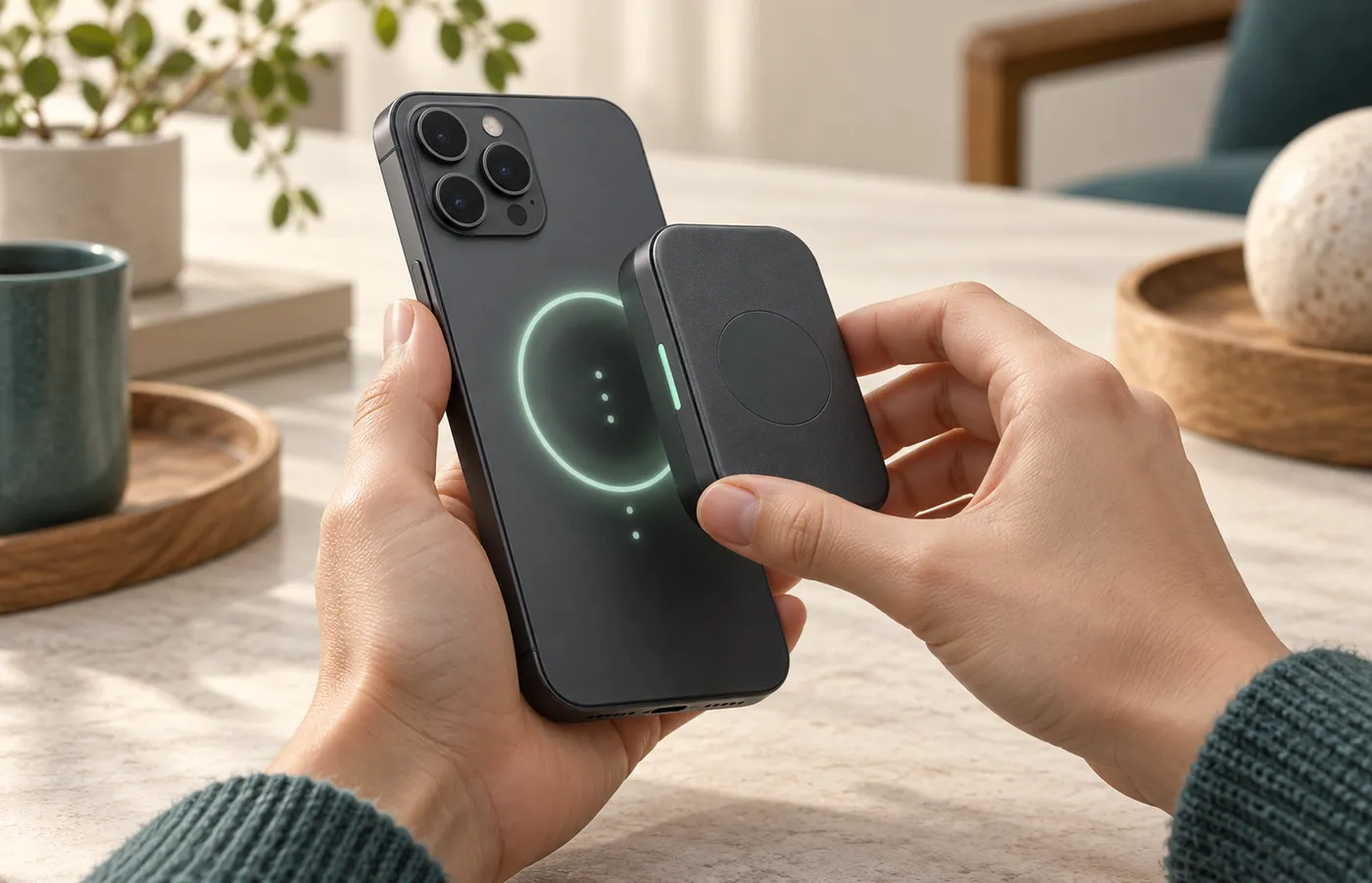
Pocket is a credit-card-sized AI recorder from HeyPocket that snaps onto a phone with MagSafe — Apple's magnetic mount. By separating the recorder from the phone, Pocket can capture thoughts instantly "without screens, taps, incoming calls, or missed moments" [SPEC — heypocket.com, retrieved September 12, 2026]. Non-MagSafe phones get an optional adhesive mount included in the order.
Capture is deliberately low-friction. Press the side button and Pocket starts recording instantly, confirming with a light indicator and a vibration; press again to stop. No app to open, no screen to unlock — one button and a physical cue. Our phone-app vs recorder guide frames why that separation matters.
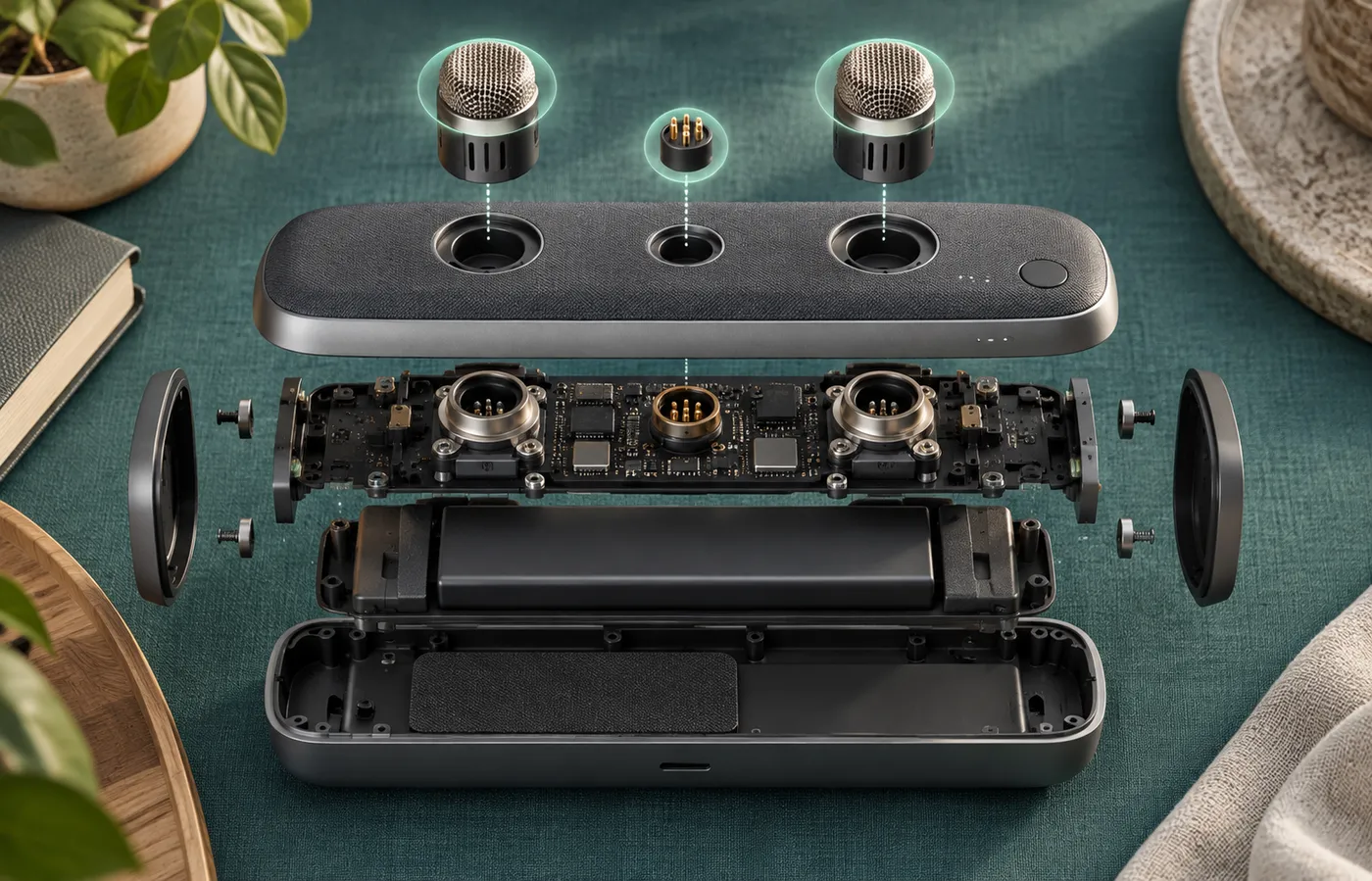
The audio hardware is a three-microphone array: "2 studio mics + 1 contact mic for clear, speaker separated audio". The two studio microphones handle in-person conversation; the contact microphone is the distinctive piece — it captures phone calls when Pocket is placed on the back of the phone, picking up the call audio without a speaker. That is why Pocket appears in our phone-call recorder guide.
Around that array, the maker publishes a battery figure of "4 days of active use", 64 GB of onboard storage plus unlimited cloud, a recording range claim of "up to 15m / 49ft", and support for "over 120+ languages". These are manufacturer-published specifications, not independent measurements — the 15-meter range in particular depends on room acoustics and placement, as our mic-distance guide explains. We compared published specifications, owner reports, and plan structures; we have not hands-on-tested the device.
Going deeper
The plan structure that matters
The reason Pocket is interesting is not the hardware — it is the pricing philosophy. Pocket's Free tier is built around unlimited standard-accuracy transcription. The maker's homepage states it plainly: "Unlimited minutes • No subscription required" and "Unlimited transcription + core features. Free to use, forever".
The Free tier, per the maker's published plan structure, includes unlimited transcription at standard accuracy, Ask Pocket (the built-in Q&A assistant) at two messages per day, unlimited summaries saved for 30 days, unlimited todos and task-app integrations, mind maps, and plain-text exports.
The paid tier is now named Pro. Pro adds the features that cost real compute: highest-accuracy transcription, automatic speaker-name detection, unlimited Ask Pocket, summaries saved forever, access to the most capable AI models, daily highlights, custom templates, advanced integrations, file attachments, and full export formats. The maker frames Pro as billed annually, with the annual rate working out lower than month-to-month.
The structural point: "no subscription" and "no subscription ever, for anything" are different promises. Pocket's Free tier needs no subscription to be useful — but the highest-accuracy model, speaker auto-naming, and unlimited Ask Pocket live behind Pro. Our subscriptions guide compares every tier across brands, and our no-subscription guide maps the devices where transcription is genuinely free at full quality — Pocket is the free-at-standard-accuracy option, not the free-at-highest-accuracy one.

Practical guidance
The launch-pricing reality
Pocket is sold at a launch special with moving parts worth understanding before you check out. The maker's product listing sells the device at a launch price against a higher list price, and a separate marketing block advertises a lower device price when you bundle it with the subscription. The first 30 days of the subscription are free, starting after delivery; after that, a monthly-billed rate keeps the advanced features unlocked.
We are deliberately not printing dollar figures here — launch pricing is promotional, the bundle changes the effective device cost, and the numbers will have moved by the time you read this. Check the current price on the maker's page at purchase time, and understand that the headline device price and the bundle price are two different numbers.
One structural caution from our PLAUD vs Pocket comparison: the maker's own pages have disagreed about what the free tier includes — the homepage promises unlimited minutes, while another page on the same site described a 300-minutes-per-month free allowance. As of our September 2026 check the maker's published plan structure shows unlimited standard-accuracy transcription on Free, but the history of internal contradiction is exactly why we tell buyers to verify the current free-minute terms on heypocket.com (or in-cart) before paying.
The wrap-up
Privacy posture
Pocket's privacy story is a local-first one. The maker states that Pocket records offline and stores audio on-device; when you are back online and open the app, it syncs and generates summaries.
For the cloud side, the maker claims encrypted storage, secure cloud syncing, and privacy-focused systems, with data "never sold or shared". The published posture adds: encrypted in transit and at rest, least-privilege access, US-based hosting, DDoS protection, and an enterprise business-associate agreement on request. These are maker claims, not independent audits — our privacy guide maps where each device's audio goes.
Two boundaries apply to any recorder, Pocket included: local storage changes where audio goes, not whether recording is lawful — consent rules still apply (recording consent laws guide) — and a young company's privacy policy is a promise about future behavior.
Context
What owner signals exist
This is where an honest review has to slow down, because the evidence is mixed.
First, the independent signal: a Trustpilot search snippet for heypocket.com, retrieved September 12, 2026, reads that across 4,000+ reviews "reviewers overwhelmingly had a great experience with this company" [REVIEW — third-party snippet, trustpilot.com/review/heypocket.com].
Second, the maker-curated signal: the on-site review widget on heypocket.com shows "4.9 based on 634 reviews," with 90% (572 of 634) at five stars [SPEC — maker-curated].
Third, the caution signal: our PLAUD vs Pocket comparison carries the Reddit threads that cross-shop and warn about the brand — most notably "Avoid Pocket, I guess" raising trust concerns, and cross-shopping threads like "Considering Plaud or Pocket for daily quick notes" [OWNER — thread titles as quoted on our vs-page, verified August 2026].
The balanced read: Pocket is a very new brand whose boldest promise has been contradicted by its own website, and whose long-term reliability is simply unproven — that is different from being a scam, and we do not claim to know which way it goes. Our review methodology labels this page evidence synthesis with a wide unknown column.
Comparison
Who should skip it
Pocket is not for everyone.
If your notes need to flow automatically into a deep integration surface — Notion, Zapier, Dropbox, ChatGPT via MCP — Pocket's thinner integration set will frustrate you. That is the PLAUD case: the category leader's export and integration surface is the widest in the category — see our PLAUD Note review and PLAUD alternatives guide.
If you want a screen on the device itself — live status, on-device review — Pocket's card has no screen, and that is where HiDock's on-device display approach answers the need. Our HiDock P1 review covers the screen-on-device workflow and the 18-month warranty.
If you are risk-averse about a young brand, the genuinely subscription-free alternatives — HiDock's unlimited included transcription and iFLYTEK's fully offline model — give you Pocket's economics with less trust risk, as our no-subscription guide lays out.
Method
Spec table
Every figure below is maker-published [SPEC — heypocket.com, retrieved September 12, 2026]. No figure comes from hands-on testing.
| Spec | Maker's published figure |
|---|---|
| Brand / maker | HeyPocket (Open Vision Engineering) |
| Form factor | Credit-card-sized, MagSafe-snapping card |
| Mount | MagSafe-compatible; optional adhesive mount for non-MagSafe phones |
| Capture control | Side button; light indicator + vibration confirmation |
| Microphones | 2 studio mics + 1 contact mic (phone calls without speaker) |
| Recording range | Up to 15 m / 49 ft (environment-dependent) |
| Battery life | 4 days of active use |
| Charging time | 1.5 hours |
| Storage | 64 GB onboard + unlimited cloud |
| Languages | Over 120+ |
| Interfaces | BLE / Wi-Fi / USB-C |
| Size & weight | 52 g (3.4 × 2.2 × 0.2 in · 1.8 oz) |
| Apps | iOS, Android, web app |
| AI models | GPT-5, Claude, and more — model-agnostic |
| Integrations | Calendar, tasks, Drive, AI assistants, MCP |
| Warranty | 1 year |
| Returns | 30 days from delivery |
FAQ