On this page
Omi Review (2026): The Open-Source, Local-First Pendant, Honestly Weighed
The short version
The 50-word verdict
Omi is the category's open-source, local-first pendant: a one-time device purchase, unlimited on-phone transcription on a free plan, and a maker platform built for tinkerers. The trade-offs are real — thin independent evidence, a 10–14-hour battery, no water resistance, and an always-listening pitch that puts the consent duty on you.
The details
What Omi is
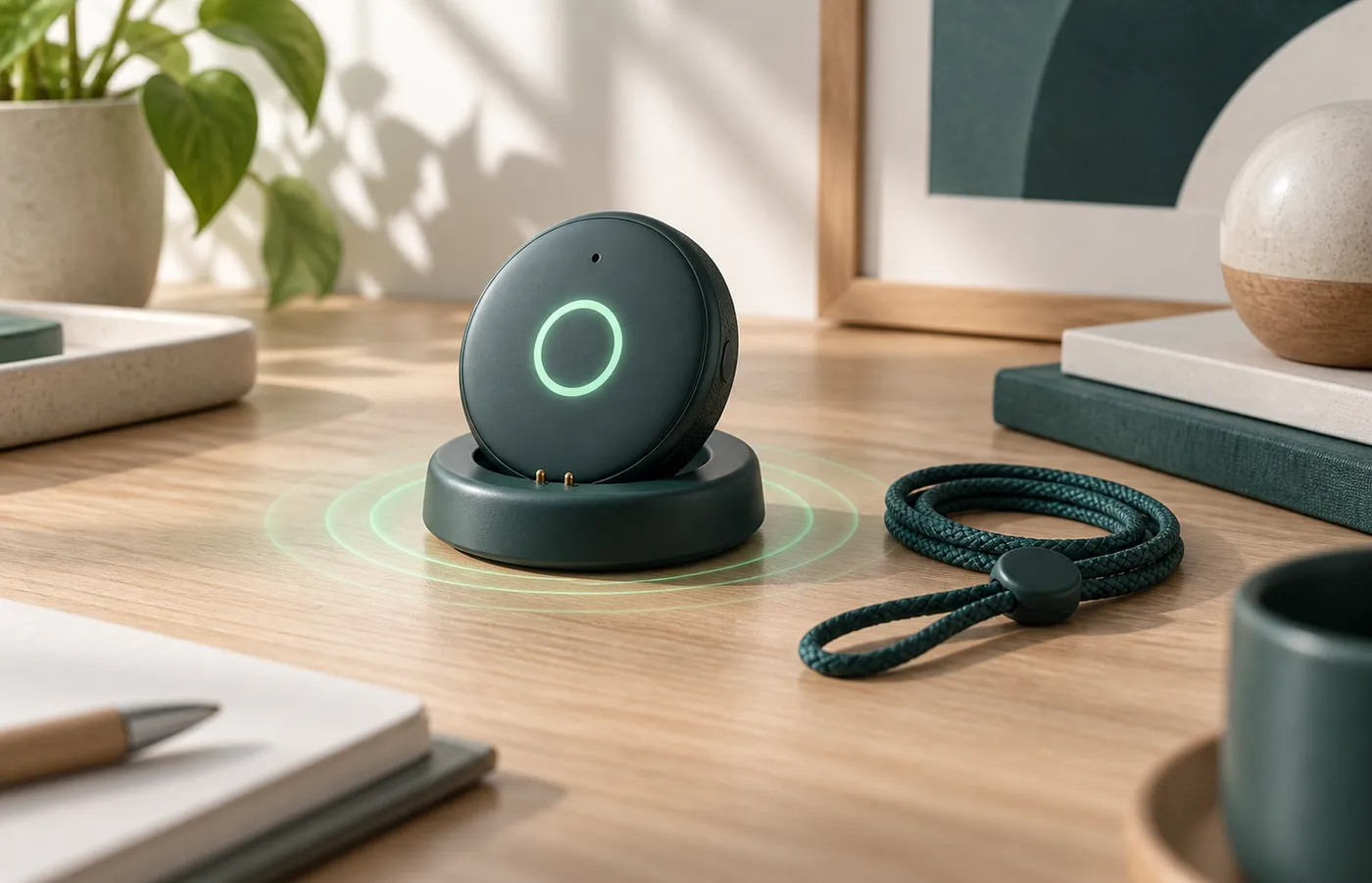
Omi is a wearable pendant from Based Hardware, positioned unlike anything else in our comparison set. The maker's homepage leads with "2nd brain you trust more than your 1st" [SPEC — omi.me, retrieved September 12, 2026] and a thesis that doubles as the product's identity: "Open source. Own your data. Runs on your device.". The maker describes a pendant that "records your conversations & meetings and turns them into searchable transcripts, summaries, action items, and memories" on iPhone, Android, Mac, and any browser.
The commercial structure is the second distinguishing feature: a one-time device purchase with an optional subscription behind it — the inverse of this category's metered-minutes norm. We keep prices out of body copy; check omi.me for the current device figure and plan pricing.
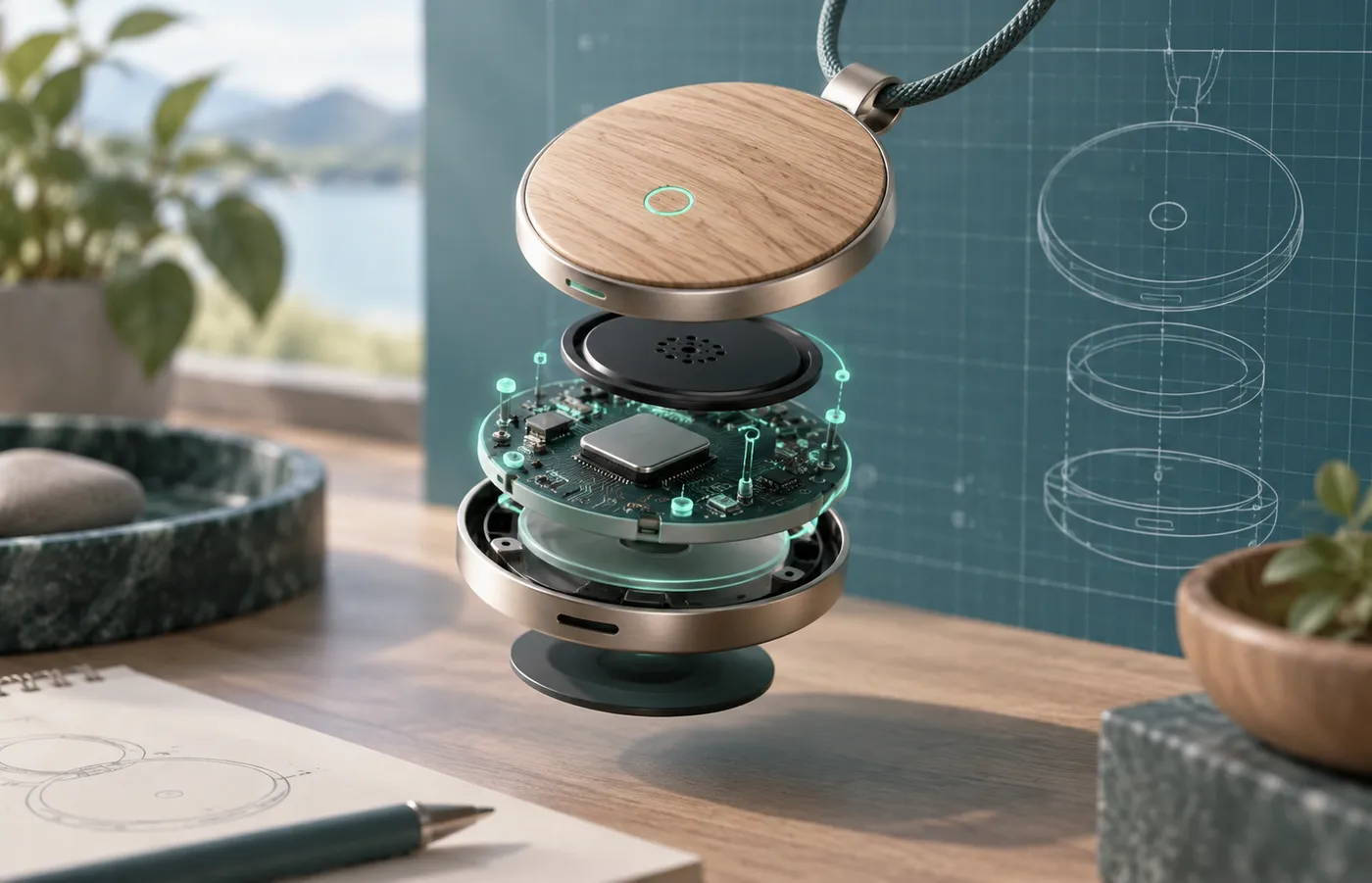
On capability, the maker claims transcription of "everything you say and hear," automatic summaries, tasks and memories, "25+ languages: single/multi + translation," speech profiles, and both live streaming and offline recording. Two honesty notes: the first version ships audio-only, and the maker says a separate brain-interface module is "coming in 2026-2027" — a roadmap item, not a shipping feature.
Going deeper
Plans and minutes
Omi's plan structure is a free tier with real work in it, plus two paid cloud upgrades. Per the maker's help center, the lineup is Basic, Plus, and Unlimited [SPEC — help.omi.me, retrieved September 12, 2026]:
- Basic (free): no subscription required — unlimited on-phone transcription plus "300 Listening Minutes per Month" of cloud transcription. The maker's docs add a detail most summaries omit: "Reaching the 300-minute limit does not stop Omi from recording" — capture continues; the cloud allowance is what is metered.
- Plus: "1,500 Listening Minutes per Month", with an annual option the maker says works out lower per month.
- Unlimited: "Unlimited Listening", again with an annual option the maker frames as the better per-month deal.
That is plan structure, not just a pricing ladder: the free tier pushes transcription onto your phone; cloud minutes are the upgrade path. Our AI recorder subscriptions guide maps how every maker meters minutes; Omi's 300 free cloud minutes match several competitors' allowances, while unlimited on-phone transcription is the genuine differentiator. One correction for transparency: our table previously carried a larger free cloud figure; the maker's help center says 300 — now corrected.
Practical guidance
The privacy architecture
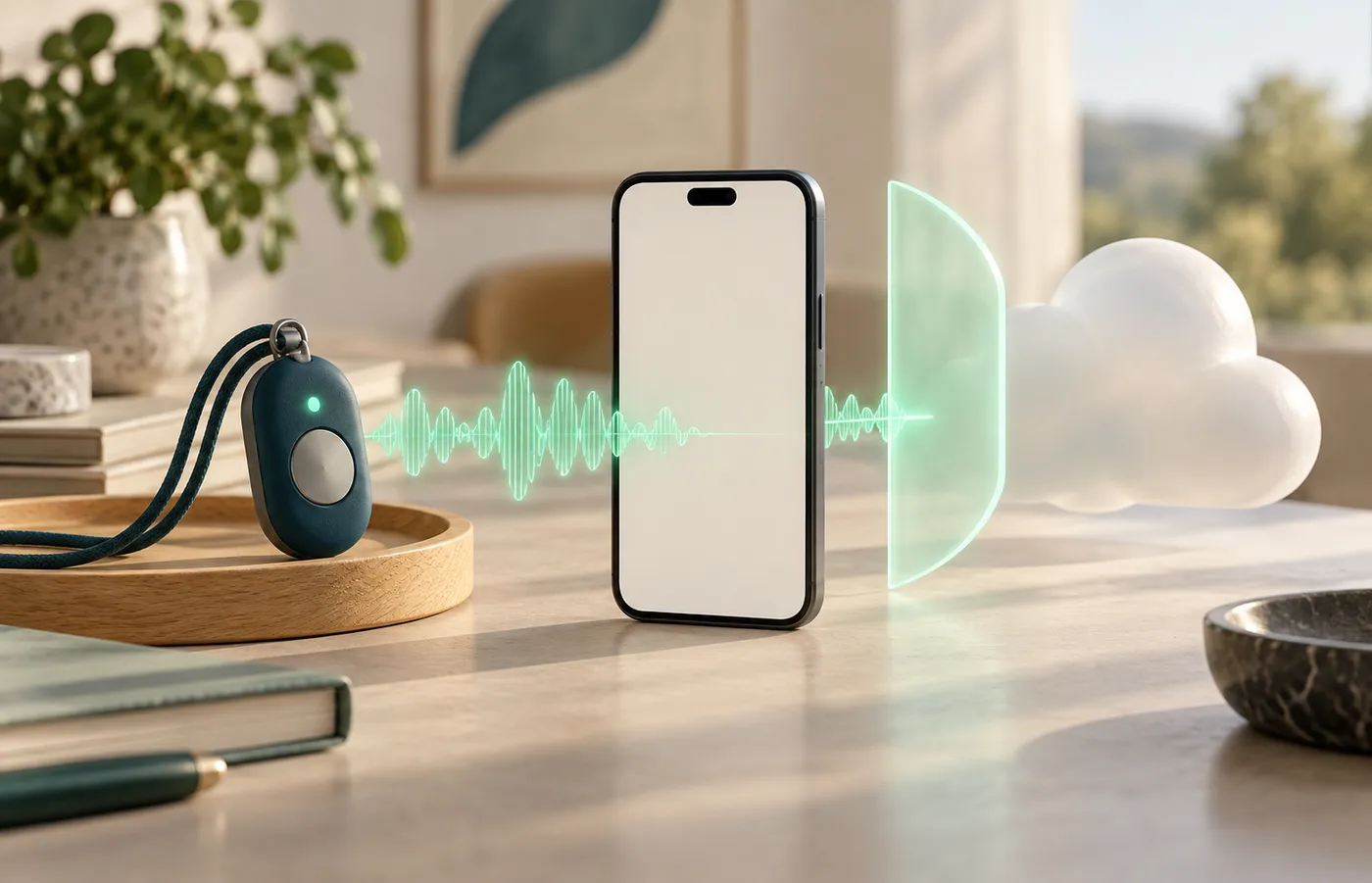
Omi's privacy story is the maker's strongest marketing pillar, so it deserves scrutiny. The claims, all maker-published [SPEC — omi.me, retrieved September 12, 2026]: "Conversations can be stored locally on your phone, or on the cloud"; a manual setting lets the system "run locally so you can avoid relying on any cloud"; encryption in transit is TLS and at rest AES-256-GCM; the maker states it is "SOC 2 and HIPAA compliance"; AI training on user data is off; delete controls are manual; everything can be exported.
Three honesty notes. First, local processing is an option you configure, not the posture you unbox — the product ships cloud-connected, and our local vs cloud transcription guide explains why that default matters more than the menu. Second, SOC 2 and HIPAA are the maker's compliance claims; we have not audited them. Third, local-first changes where audio goes, not whether capture is lawful — our privacy guide maps where each device sends audio, and Omi is the rare entry where the answer can be "your phone, only."
The wrap-up
Always-listening vs the record button
Here is the tension in the maker's own words. The homepage markets a "Wearable Notetaker Pendant That is Always Listening"; the help pages describe a different gesture: "Hit record, and you'll get automatic transcripts, summaries, action items, and searchable memories". Both postures appear in the maker's own materials, and they are not the same behavior: one is ambient capture, the other press-to-record.
Our read: Omi is engineered for continuous capture and marketed on that identity; the record button is the workflow its docs explain. Either way, the maker's guidance concedes the core issue: the pendant "can also pick up other voices nearby," and owners are told to "always get permission to record others and follow local recording laws". That duty lands on the wearer, not the hardware — an always-on microphone in a meeting, office, or street writes bystanders into your transcript without their opt-in, and in all-party-consent jurisdictions that is legal exposure. Our recording consent laws guide sets out one-party versus all-party rules; read it before wearing this into conversations you did not organize.
Context
The tinkerer platform
This is where Omi has no rival in our dataset. The maker's "Build & Extend" menu reads: "Open source: Open hardware + software · API & MCP server: work with your data · One-click AI apps: Build tools no-code · Custom STT: choose your STT provider · Ship apps to Omi App Store (paid/free)". Unpacked:
- Open source, hardware and software. Design files and source code you can inspect and modify — the opposite of a black box you rent.
- API and MCP server. Transcripts and memories become addressable by your own scripts and agents — the MCP pattern closed ecosystems gate behind their platforms.
- Custom STT. You choose the speech-to-text provider — unique in our comparison set, and the practical lever that makes the local-first claim executable.
- An app store you can ship to. The maker's pages claim "1000+ apps" in one place and "thousands of tools" in another — the variance is the maker's own; the honest read is a real but young app surface.
Custom vocabulary and jargon lists round out the platform. The pitch is coherent: Omi is the pendant you adapt, not the one you adopt as-is.

Comparison
What owner signals exist
We label evidence by source, and Omi's is almost entirely maker-curated. The product page claims "500+ Verified Reviews!" — verified and curated by the maker, not an independent base we can weigh. The maker counts "9,000+ users in our Discord Community" — a real community signal, but a maker-counted and maker-curated one. The homepage adds "Trusted by 300,000+ professionals", a marketing figure published without methodology.
The independent column is thin, and we will not pad it: as of our September 12, 2026 check, our research pass could not surface a meaningful base of independent English-language owner reports, and no lab benchmark of the transcription engine appears in our dataset. Our review methodology labels this page evidence synthesis with a wider unknown column than most. We compared published specifications, owner reports, and plan structures; we have not hands-on-tested the device.
Method
Spec table
Every figure below is maker-published [SPEC — omi.me, retrieved September 12, 2026]. No figure comes from hands-on testing.
| Spec | Maker's published figure |
|---|---|
| Form factor | Wearable pendant ("Wearable Notetaker Pendant") |
| Microphones | 2 |
| Battery life | 10–14 hours |
| Battery capacity | 150 mAh |
| Dimensions | 2.5 cm diameter × 1.5 cm height |
| Bluetooth | 5.1 |
| Wi-Fi | 2.4 / 5 GHz |
| Charging | Dock with pogo-pin contacts |
| Compatibility | iOS 15+; Android 7+; Mac desktop; any browser; Apple Watch recording supported |
| Languages | 25+ — single and multi-speaker, plus translation |
| Offline recording | Yes (maker-listed latency: 500–2,000 ms live; 10–20 s offline) |
| Speaker recognition / noise reduction | Yes / Yes |
| Encryption | TLS in transit; AES-256-GCM at rest |
| AI training on user data | No; delete controls: manual delete |
| Water-resistant | No |
| Onboard storage | Not published — the maker lists no storage figure; capture runs through the phone |
| Brain-interface module | Roadmap only: audio-only first; priority access "coming in 2026-2027" |
| In the box | Device, silicone case, neck lanyard, magnetic USB-C charging cable, quick-start guide |
Bottom line
Who should skip it
Three buyers should look elsewhere. First, polished-ecosystem seekers: if you want a closed, curated app experience with mature integrations, PLAUD's NotePin S is the wearable built that way — a 20-hour-battery pendant with the PLAUD app, Notion/ChatGPT/Zapier integrations, and the category's standard 300 free cloud minutes; our NotePin S review covers it.
Second, zero-tinkering users: if you will never open an API, choose an STT provider, or browse an app store, you are paying for a platform you will not use; a closed out-of-the-box product fits better.
Third, Amazon-return-window shoppers: Omi sells direct through its own site; as of our September 12, 2026 check we found no Amazon listing — no Amazon checkout, no Amazon return window. The maker's own "Pre-order" button is the purchase path. If Amazon's returns are your safety net, it does not exist here. If you want a wearable through Amazon:
FAQ